


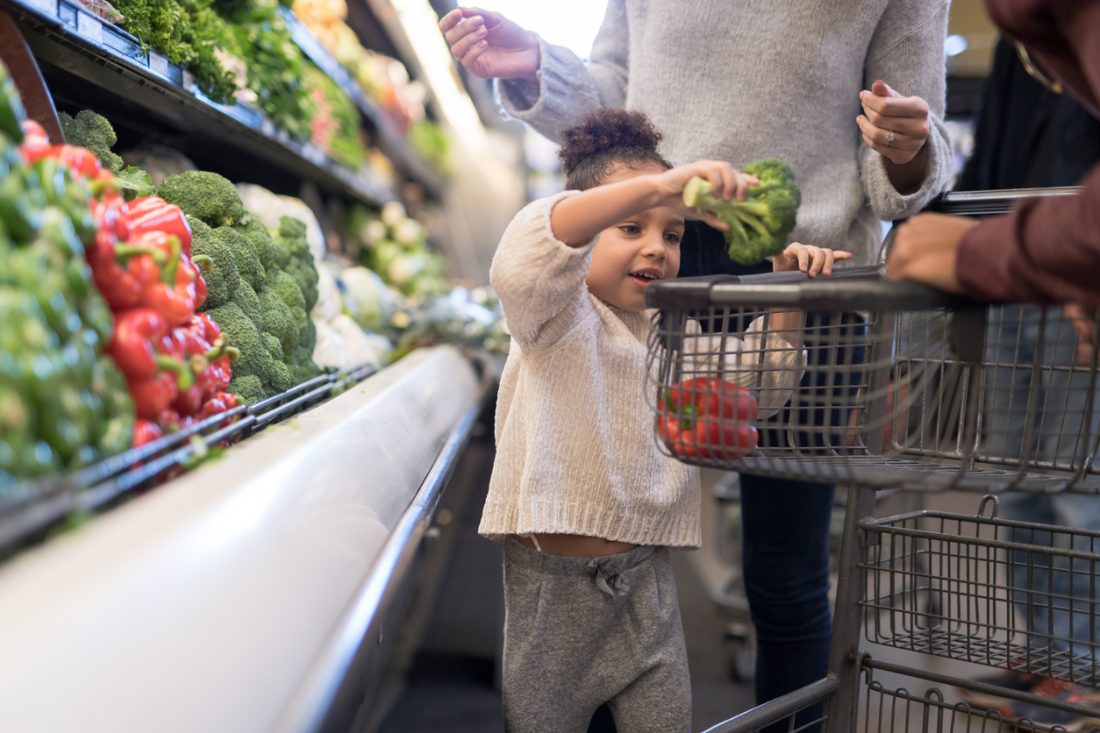
Surviving Grocery Shopping with Kids
A trip to the grocery store with the kids isn’t most parents’ idea of fun. Between wrestling the littlest ones into the carts and strapping them in, keeping toddlers from running off, and steering clear of the cookie and candy aisles, it can be stressful! Sometimes the best option is to shop alone, but that’s not always possible. So how do you turn this common struggle into a better experience – healthy and fun – without handing out too many of those free cookies from the store’s bakery?
Start with a snack. Before you head to the store, there’s one thing that can make a big difference – give your child a snack! Hunger is a surefire way to ruin a trip to get groceries.
Set clear expectations. If your child tends to fuss in grocery stores over wanting something like candy, don’t give in. Instead, set clear expectations about how they should behave and the consequences if they don’t. Consider trying this for the first time when you don’t really need to buy much. Explain that you’ll be quick and that you expect them to be quiet and to stay by your side. Say you won’t be buying any candy, and that if they make a fuss, you’ll leave the store. If they don’t follow the rules, immediately follow through and head back to the car. Don’t warn them again or talk about the candy. Explain in simple words that they didn’t do what was expected this time, and you know they’ll do better next time. Then try again soon to give them a second chance to succeed, and when they do, praise how well they did.
Let them be your helper. Kids learning to read and write can be put in charge of your shopping list. At home, you can dictate the items and have them write it for you. At the store, they can hold it, read it to you, and check off what goes into the cart. Ask, “Where should we go to find the next item on the list?”
Play some games! Can they find a fruit or veggie in every color of the rainbow? What about pink and white too? How many red or green items can they see in the produce aisle? Work with older kids to read nutritional labels, and ask if they can find a box of cereal with 6 grams of fiber per serving or one with no sugar in the ingredients list. You can teach them about comparing prices by asking them to find the least expensive eggs or gallon of milk.
Ask what food they want to try. You may get some unexpected help feeding a picky eater if you let them guide you. Explain that a healthy dinner includes veggies, whole grains, and protein. Then ask questions like,
- “What veggie here do you like best?”
- “Which new fruit would you like to try?”
- “What protein should we have for dinner tomorrow?”
Healthy eating starts with making healthy choices in the grocery store, so this can be a great time to teach your kids about nutrition.
Try these healthy shopping tips:
- Show them how the more nutritious foods like fresh fruits, veggies, and dairy items are often located around the store’s perimeter, and that the packaged foods in the center aisles can be a lot less healthy
- Explain how to choose bread, pasta, grains, and cereal products with whole grains listed as the first ingredient. Examples of these are whole-wheat bread, corn tortillas, or brown rice.
- Have them choose low-fat and nonfat dairy products. And look for low-sugar yogurt options. Usually, Greek yogurt is a good choice, as it has less sugar and more protein.
- Skip the juice and soda. Both have too much sugar.
We all know that going to the store without kids in tow is easier and faster. But if they have to come along maybe they can learn a bit and have some fun!


About the Author

Disclaimer: If you have an emergency medical condition, call 911 or go to the nearest hospital. An emergency medical condition is any of the following: (1) a medical condition that manifests itself by acute symptoms of sufficient severity (including severe pain) such that you could reasonably expect the absence of immediate medical attention to result in serious jeopardy to your health or body functions or organs; (2) active labor when there isn't enough time for safe transfer to a Plan hospital (or designated hospital) before delivery, or if transfer poses a threat to your (or your unborn child's) health and safety, or (3) a mental disorder that manifests itself by acute symptoms of sufficient severity such that either you are an immediate danger to yourself or others, or you are not immediately able to provide for, or use, food, shelter, or clothing, due to the mental disorder. This information is not intended to diagnose health problems or to take the place of specific medical advice or care you receive from your physician or other health care professional. If you have persistent health problems, or if you have additional questions, please consult with your doctor. If you have questions or need more information about your medication, please speak to your pharmacist. Kaiser Permanente does not endorse the medications or products mentioned. Any trade names listed are for easy identification only.