


Decoding Food Packaging Claims
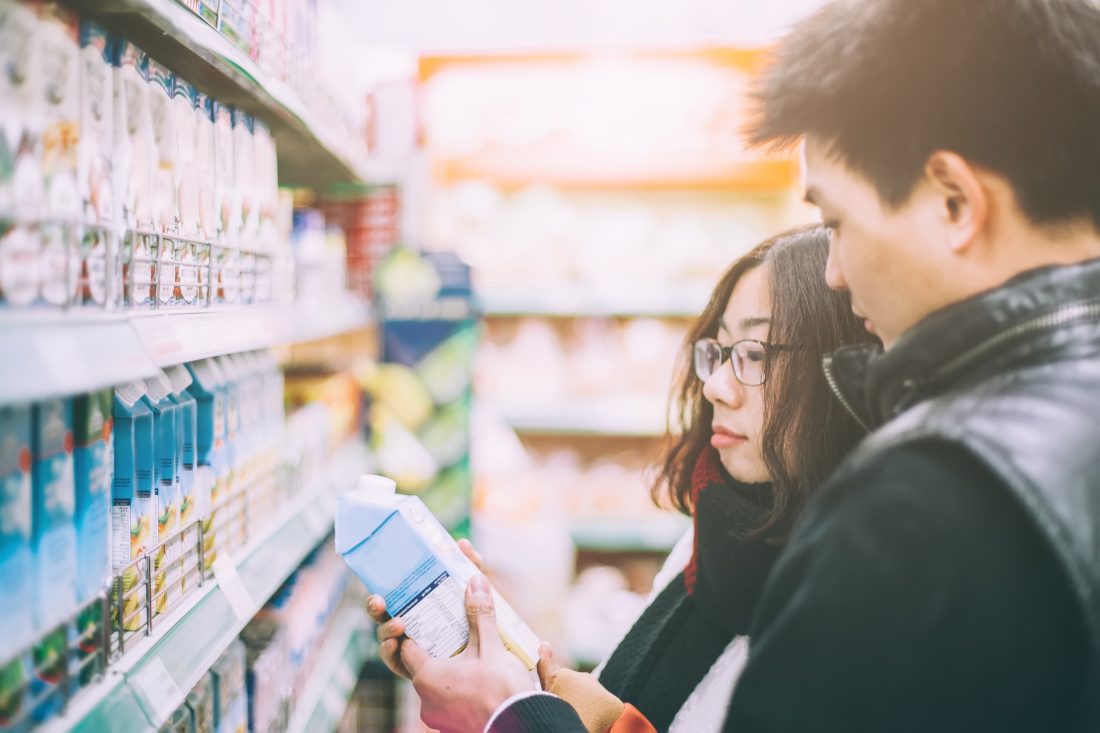
What do you look for when you shop for groceries? There’s a lot to consider, including cost, nutritional value, and of course – will the kids eat it? Then there’s the matter of figuring out all the claims, labels, and endorsement logos you may see on a package. When you’re short on time–or have a restless kid with you–decoding all of these can be frustrating. Knowing what food labels mean (and what they don’t) can help you make the best decisions for your family.
The US Department of Agriculture (USDA) and the Food and Drug Administration (FDA) have certain rules that food manufacturers must follow in how they label their packages. Guidelines apply to labels on food packaging.
What do “organic,” “fortified,” “enriched,” “healthy,” and “natural” labels actually mean?
USDA Organic
- Products must be produced without synthetic fertilizer or synthetic pesticides, genetic engineering, ionizing radiation or sewage sludge.
- Livestock must be grown without antibiotics and on agricultural land meeting all organic crop production standards.
- Products can use the USDA organic label and the words “100% organic” if they contain 100% organic ingredients, and the word “organic” if they contain 95% organic ingredients, excluding salt and water.
But keep in mind that “organic” is not a health claim. Organic fruits, vegetables and animal products generally have similar amounts of carbohydrates, protein, fats, minerals and micronutrients as non-organic products.
While eating organic foods likely reduces your family’s exposure to pesticides and antibiotics, eating ANY whole fruits and vegetables is important for kids and adults. And whether you choose organic or not, eating apple slices is healthier than apple juice or fruit snacks.
Fortified or Enriched
- Vitamins and or minerals have been added to the food. For example, vitamin D is often added to cow’s milk, and calcium and other nutrients may be added to non-dairy milk.
- Enriched flour returns riboflavin (vitamin B2) and thiamine (vitamin B1) that have been lost during the milling process and adds iron and folic acid.
- Enriched flours aren’t whole grains.
Fortification and enrichment guidelines are regulated by the FDA. These additions can be important for children’s health, such as when iron is added to prevent iron-deficiency anemia, or calcium and vitamin D are added to help kids meet their nutritional needs.
Healthy
- Means foods are low in total fat, or predominantly contain mono- and poly-unsaturated fats.
- May also indicate foods that are low in sodium and are a good or excellent source of vitamin A, vitamin C, iron, protein and fiber
Note that while the FDA provides guidance on the use of the term “healthy,” it doesn’t independently verify this label. Nor does the label provide guidance about sugar. Foods labeled as healthy may still be high in sugar.
The “healthy” label is currently undergoing review by the FDA and may be changed in the near future.
Natural, All Natural, 100% Natural
- Means that nothing artificial or synthetic, including color additives, are included in the product for all other foods, advises the FDA.
- Applies to meat, poultry, and egg products if there are no artificial ingredients or colors and it was minimally processed.
- Doesn’t mean that the product is organic.
- May contain added sweeteners, including high-fructose corn syrup.
Like the label “healthy”, the “natural” label is self-reported by food companies and isn’t independently confirmed by the FDA.
There are additional claims not verified by the FDA or the USDA but which might provide useful information for your family:
Whole Grain
- Many foods labeled as “whole grain” have only some or minimal whole grains. To make sure you’re buying foods actually high in whole grain, look for products that contain 100% whole grain, or where whole grains are the first ingredient in the list.
- The Whole Grains Council provides a label or stamp indicating the percent of whole grains in foods. Companies pay to become members and sign a legal document that their product contains the amount of whole grain indicated in the stamp.
Non-GMO Project Verified
- A genetically modified organism has genetic material that’s been altered in a laboratory (not through cross-breeding, which has been done for thousands of years).
- The Non-GMO Project Verified label means that the product and its ingredients weren’t produced by genetic engineering. This is verified by a non-profit organization and not the FDA or USDA.
Genetically modified foods are generally considered safe for consumption, but some people wish to avoid them. They’re resistant to herbicides and may harm the environment by increasing the need for pesticides. While all products with the USDA Organic label don’t contain GMOs (Genetically Modified Organisms), not all products with the Non-GMO Project Verified label are organically produced.
Certified Plant-based
- This label is provided by NSF International, a private entity that independently certifies foods that contain no animal products.
Certified Vegan
- This label is certified by Vegan Action, a non-profit organization, and can be used on both food and non-food items.
- Foods with the label contain no animal products or honey.
- Products with the label weren’t tested on animals nor processed with animal by-products such as fur, hair, skin, or bone.
What are you to with all this information? The more you know, the more informed you can be in making decisions on what to buy for your family. We know that children should eat a diet rich in fruits, vegetables, whole grains, lean proteins, and dairy or non-dairy milks fortified with calcium and vitamin D.
You may have considered feeding your family eat a plant-based or vegan diet, and this can be a healthy choice. But is all plant-based food healthier for you? Not necessarily! Foods that are high in sugar and salt can be vegan too. For example, fruit juice is vegan but not nearly as healthy as whole fruit, which contains fiber and far less sugar per serving. Plain potato chips can be vegan but are high in salt and oil. Vegan meat substitutes can sometimes contain as much salt and fat as meat. The best choices are whole plant foods like fruits, vegetables, grains, lentils, beans, and nuts.
No matter which foods you choose to prepare, know that eating together as a family is important for your kids’ health too!
Resources for Parents:
U.S. Department of Agriculture
About Organic Labeling
U.S. Department of Health and Human Services
Dietary Guidelines for Americans, 2020-2025 and Online Materials | Dietary Guidelines for Americans
U.S. Food and Drug Administration
Food Labeling and Nutrition


Featured Author
 Dr. Jayaraman's biography reads: I am a general pediatrician with the Southern California Permanente Medical Group at the Bellflower Medical Office, and a mom of two. I’m also the program director for the High-Risk Infant Follow up Clinic for the Downey Medical Service Area. Being a pediatrician is a joy and a privilege, as well as an opportunity for life-long learning. I hope that my patients and their families can learn as much from me as I have from them.
Read more here: https://healthy.kaiserpermanente.org/southern-california/physicians/madhangi-jayaraman-5942413
Dr. Jayaraman's biography reads: I am a general pediatrician with the Southern California Permanente Medical Group at the Bellflower Medical Office, and a mom of two. I’m also the program director for the High-Risk Infant Follow up Clinic for the Downey Medical Service Area. Being a pediatrician is a joy and a privilege, as well as an opportunity for life-long learning. I hope that my patients and their families can learn as much from me as I have from them.
Read more here: https://healthy.kaiserpermanente.org/southern-california/physicians/madhangi-jayaraman-5942413 Disclaimer: If you have an emergency medical condition, call 911 or go to the nearest hospital. An emergency medical condition is any of the following: (1) a medical condition that manifests itself by acute symptoms of sufficient severity (including severe pain) such that you could reasonably expect the absence of immediate medical attention to result in serious jeopardy to your health or body functions or organs; (2) active labor when there isn't enough time for safe transfer to a Plan hospital (or designated hospital) before delivery, or if transfer poses a threat to your (or your unborn child's) health and safety, or (3) a mental disorder that manifests itself by acute symptoms of sufficient severity such that either you are an immediate danger to yourself or others, or you are not immediately able to provide for, or use, food, shelter, or clothing, due to the mental disorder. This information is not intended to diagnose health problems or to take the place of specific medical advice or care you receive from your physician or other health care professional. If you have persistent health problems, or if you have additional questions, please consult with your doctor. If you have questions or need more information about your medication, please speak to your pharmacist. Kaiser Permanente does not endorse the medications or products mentioned. Any trade names listed are for easy identification only.