


How to Care for Your Newborn’s Umbilical Cord
Before a baby is born, its umbilical cord serves as a lifeline to its mother, providing oxygen and nutrients. Right after birth, the cord is clamped and cut. Over the next couple of weeks, the cord dries, falls off on its own, the area heals, and your baby has a belly button.
Until then, a newborn has a small umbilical cord stump, and it’s common for new parents to wonder about how to care for it.
How do I care for the umbilical cord?
The most important thing you can do is keep your baby’s umbilical cord stump clean and dry.
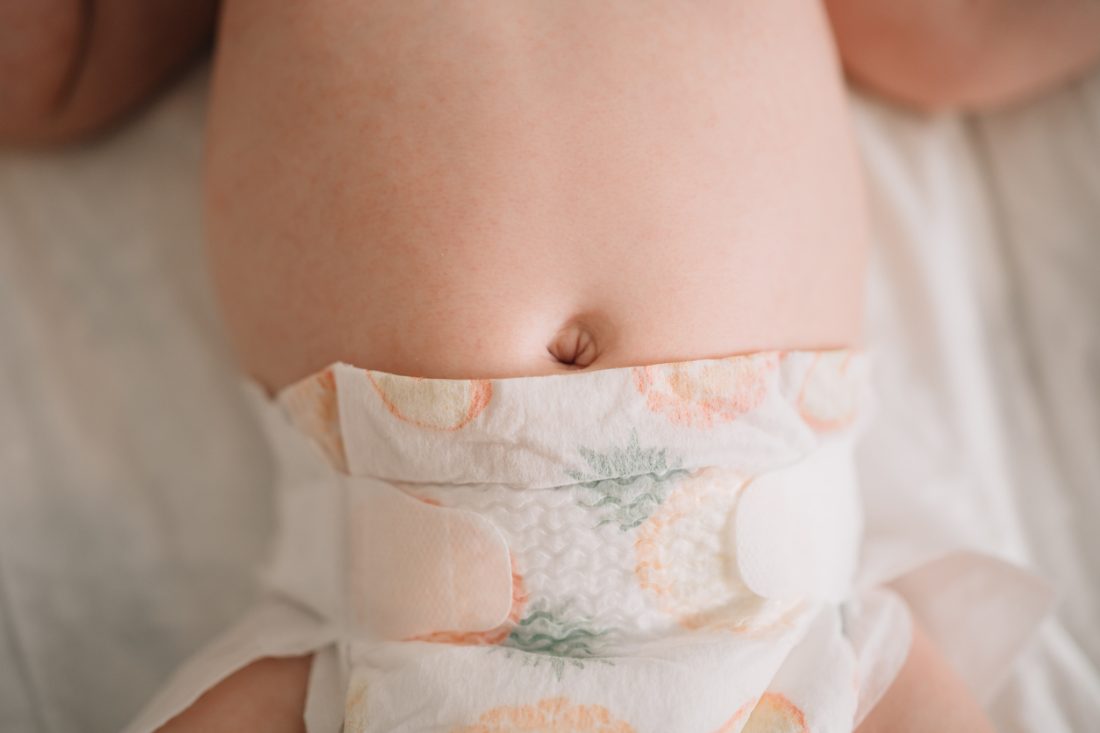
Wash your hands before touching the cord or the skin around it. Fold the front of your baby’s diaper down underneath the umbilical stump so that it doesn’t rub against the cord or get wet with urine.
While the cord is healing, sponge baths can help keep the area dry. There is no need to wash or clean the umbilical cord routinely. Simply leave the cord alone and allow it to dry and fall off naturally. If urine or stool gets on the stump, gently clean the surrounding area with water and a clean cloth, then pat it dry.
We used to recommend cleaning the umbilical stump with rubbing alcohol, but routine alcohol use is no longer recommended in most cases because it can delay the cord’s separation. Avoid alcohol, creams, oils, or other products on your baby’s umbilical cord unless your pediatrician specifically recommends them.
The stump will normally change color as it dries. It may start out yellowish or greenish and gradually become brown, gray, or black. This is a normal part of the drying process. Let the stump fall off on its own—don’t pull it off, even if it seems like it is barely attached.
Is it normal for my baby’s umbilical stump to bleed?
A small amount of bleeding from the umbilical stump, particularly around the time the cord falls off, can be completely normal. You may also see a small amount of clear or blood-tinged fluid as the area heals.
However, if the bleeding is more than a few drops, continues, or gets worse, or you’re seeing ongoing bleeding for more than a few days, contact your pediatrician. Active bleeding should be evaluated promptly.
How do I know if my baby has an umbilical cord infection?
Umbilical cord infections are uncommon, but they can become serious, so it’s important to know what to look for.
Signs of an infection may include:
- Foul-smelling discharge or pus
- Redness around the base of the stump, especially if the redness is spreading onto the surrounding skin
- Swelling, warmth, or tenderness around the belly button
- Your baby crying or seeming uncomfortable when you touch the area
- Fever (a temperature of 100.4°F or higher)
- Your baby seeming unusually sleepy, irritable, or feeding poorly
If you notice signs of infection, call your pediatrician right away. A fever of 100.4°F (38°C) or higher in a young infant always needs prompt medical attention.
When will the umbilical cord fall off?
Most umbilical cord stumps fall off within 1 to 3 weeks after birth. It is important to let the cord separate naturally.
If the stump has not fallen off by 3 weeks, make an appointment with your pediatrician. Delayed separation is uncommon but can occasionally be associated with an underlying medical condition.
What is an umbilical granuloma?
The area where the umbilical cord was attached is essentially a small healing wound. Occasionally, instead of healing normally, extra granulation tissue develops.
If your baby’s cord has fallen off and you see a small, round, pink or red, shiny or slightly moist mass in the belly button, they may have an umbilical granuloma. It may also produce a small amount of clear or yellowish fluid.
Umbilical granulomas should be evaluated by your pediatrician. Some resolve on their own, while others may need treatment, such as cauterization with silver nitrate. Your pediatrician can determine the appropriate treatment.
Does my baby have an umbilical hernia?
If the area around your baby’s belly button bulges outward when they cry, strain, or have a bowel movement, they may have an umbilical hernia.
An umbilical hernia occurs when there is a small opening in the abdominal wall that allows tissue from inside the abdomen to push outward beneath the skin. Umbilical hernias are common in babies and, in most cases, are harmless.
Treatment is usually simple observation. As your baby grows and the abdominal wall becomes stronger, the hernia will often become smaller and close on its own, commonly during the first year or two of life. Your pediatrician will check it during routine well-child visits.
Do not tape a coin or anything else over the belly button. This does not help the hernia heal faster and can irritate the skin or cause an infection.
Other concerns about umbilical cord care? Ask your pediatrician.
Umbilical cord care is usually very simple, but it’s understandable to be concerned when something looks different from what you expected. If you are unsure whether your baby’s cord is healing normally, or you notice increasing redness, swelling, drainage, bleeding, or changes in your baby’s behavior, contact your pediatrician.
Resources for Parents
American Academy of Pediatrics
Your Baby’s Umbilical Cord: 5 Surprising Facts for New & Expectant Parents
Umbilical Cord Care in Newborns


About the Author

Disclaimer: If you have an emergency medical condition, call 911 or go to the nearest hospital. An emergency medical condition is any of the following: (1) a medical condition that manifests itself by acute symptoms of sufficient severity (including severe pain) such that you could reasonably expect the absence of immediate medical attention to result in serious jeopardy to your health or body functions or organs; (2) active labor when there isn't enough time for safe transfer to a Plan hospital (or designated hospital) before delivery, or if transfer poses a threat to your (or your unborn child's) health and safety, or (3) a mental disorder that manifests itself by acute symptoms of sufficient severity such that either you are an immediate danger to yourself or others, or you are not immediately able to provide for, or use, food, shelter, or clothing, due to the mental disorder. This information is not intended to diagnose health problems or to take the place of specific medical advice or care you receive from your physician or other health care professional. If you have persistent health problems, or if you have additional questions, please consult with your doctor. If you have questions or need more information about your medication, please speak to your pharmacist. Kaiser Permanente does not endorse the medications or products mentioned. Any trade names listed are for easy identification only.