


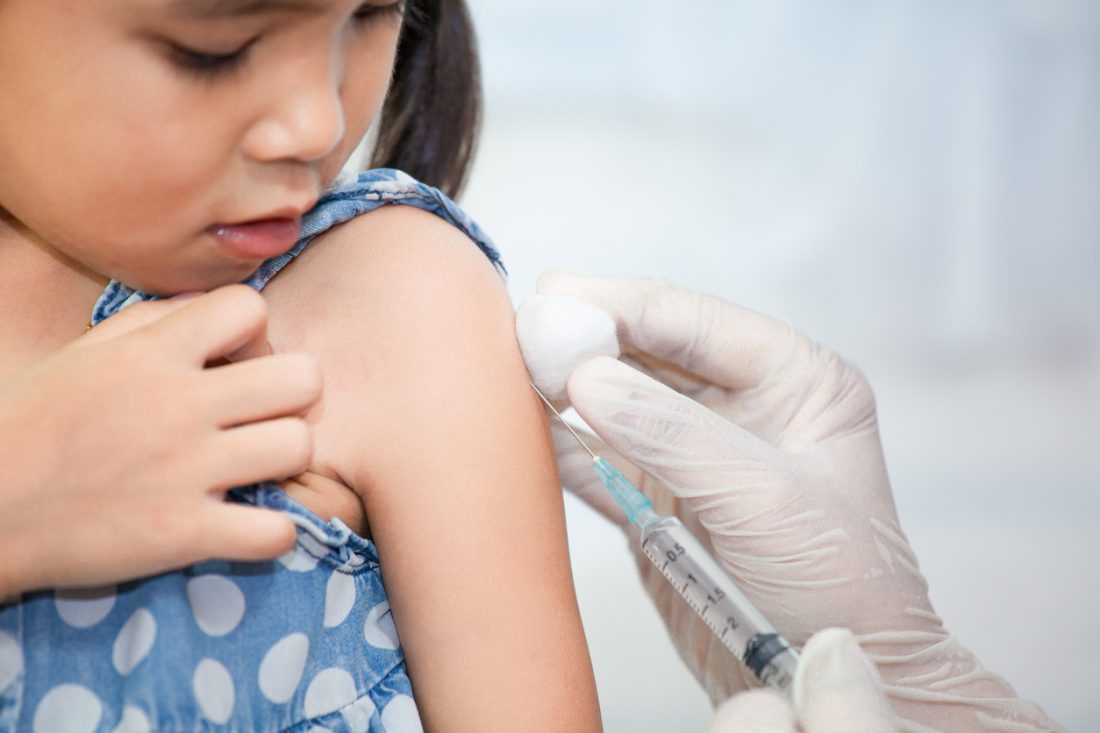
4 Reasons to Get Your Kids the Flu Shot This Year!
Even in our “post-pandemic world,” it’s still important to get a flu shot.
Childhood vaccines are something we encourage at all our pediatric office visits, including getting the yearly influenza (flu) shot each fall or winter.
Most parents do protect their children with a flu shot every year.
But some who used to get the annual flu vaccine for their kids became hesitant about the annual flu vaccine after the COVID-19 pandemic. I’ve heard reasons like, “Our whole family got COVID-19 and we were fine, so we should be with the flu too.” I let them know what the reality is: the flu vaccine is still very important and potentially lifesaving for themselves and their children.
Read on to learn 4 important reasons to get your kids vaccinated against the flu this year.
1. Flu is more of a health risk than COVID-19 infection for healthy kids.
COVID-19 and influenza (flu) are very different illnesses, especially when it comes to young children. Even if your family chooses not to get the COVID-19 vaccine series (which is still recommended for anyone over 6 months of age), your pediatrician will strongly encourage the flu vaccine, especially if your child is under age 2.
Most respiratory viruses (including influenza and RSV) hit young kids the hardest. While COVID-19 can make anyone very sick, it’s less common for young, healthy kids to have severe respiratory symptoms from it.
On the other hand, even healthy babies and children can become very ill with influenza, leading to hospitalization and serious complications. This is devastating, but fortunately we can help prevent it with the flu vaccine. A child with underlying medical conditions, including asthma, is also at increased risk of severe illness from COVID-19, flu, RSV, and other respiratory viral illnesses. It’s best to protect your child with both the flu and COVID-19 vaccines!
2. Pediatricians get their kids the flu vaccine every year.
Parents often ask if I vaccinate my own family. Yes, yes, and YES! I encourage every patient, just like my family members, to get the annual flu vaccine early in the fall.
I like to model getting the flu vaccine for my own kids. When we go to a flu shot clinic as a family, it shows them how important the vaccine is for everyone’s health. I talk openly about the vaccine with my kids. Yes, it will be a quick poke, yes, the arm may be sore for a bit, and yes, they can have some acetaminophen or ibuprofen if they have mild symptoms of tiredness, low-grade fever, or soreness after the vaccine. We often celebrate with a treat afterward!
3. The flu vaccine is helpful even when it’s not a “perfect match”.
The circulating strains of the influenza virus change from year to year. The seasonal flu vaccines are made by “predicting” the strains of flu that will hit the U.S. over the next fall and winter. This is done by watching what strains are affecting the southern hemisphere during our spring and summer. But it’s hard to know for sure; we can only make predictions. This is why flu vaccines aren’t always a “perfect match” with the circulating strains.
The good news is that even if you’re exposed to a flu strain that’s not in the vaccine you got, your body will still be more effective in fighting off flu symptoms. You’ll recover more quickly than someone who didn’t receive the flu vaccine and be less likely to need hospitalization. This also means fewer days of missed school and work.
4. The flu vaccine does NOT give you the flu!
Let me say that again: the flu vaccine CANNOT GIVE YOU THE FLU. Side effects from any vaccine can happen as your immune system revs up to recognize the virus and build antibodies to it. That way if you meet the real flu virus in the future, it can fight it off. Fatigue, muscle soreness (especially at the site of the vaccine), and low-grade fevers can be side effects from the flu vaccine, like many other vaccines. However, it doesn’t cause cough, cold, or other serious illness.
The nasal spray flu vaccine (FluMist) is different—this is called a live attenuated vaccine. Because a small amount of weakened flu virus is in the nasal spray flu vaccine, it can lead to symptoms including nasal congestion as a side effect. FluMist shouldn’t be given to kids under 2, kids with respiratory conditions like asthma, or anyone with a weakened immune system.
Bottom line—all kids, whether they’re healthy or have underlying medical conditions, should get the flu vaccine this year. (And I highly recommend the COVID-19 vaccine too!)
Resources For Parents
My Doctor Online
Cold and Flu – Where To Find Flu Vaccines
Centers for Disease Control and Prevention
Influenza (Flu)


Featured Author
 I joined the pediatrics team at Kaiser Permanente South Sacramento to help kids thrive. A professional interest of mine is to support breastfeeding families as an International Board Certified Lactation Consultant (IBCLC). During my medical training, I also pursued a degree in public health/health promotion - a field which applies to every patient visit in pediatrics. Yet, some of my most relevant experiences as a pediatrician has come from my two children, who have “trained” me first-hand on the challenges of parenthood and in finding the balance between evidence-based recommendations and reality to achieve optimal childhood growth and development. Dr. Frost's full biography can be found on My Doctor Online.
 Disclaimer: If you have an emergency medical condition, call 911 or go to the nearest hospital. An emergency medical condition is any of the following: (1) a medical condition that manifests itself by acute symptoms of sufficient severity (including severe pain) such that you could reasonably expect the absence of immediate medical attention to result in serious jeopardy to your health or body functions or organs; (2) active labor when there isn't enough time for safe transfer to a Plan hospital (or designated hospital) before delivery, or if transfer poses a threat to your (or your unborn child's) health and safety, or (3) a mental disorder that manifests itself by acute symptoms of sufficient severity such that either you are an immediate danger to yourself or others, or you are not immediately able to provide for, or use, food, shelter, or clothing, due to the mental disorder. This information is not intended to diagnose health problems or to take the place of specific medical advice or care you receive from your physician or other health care professional. If you have persistent health problems, or if you have additional questions, please consult with your doctor. If you have questions or need more information about your medication, please speak to your pharmacist. Kaiser Permanente does not endorse the medications or products mentioned. Any trade names listed are for easy identification only.