


Important and Easy Steps to Childproof Your Home
After so many years as a pediatrician, I’ve seen way too many injuries that could have been prevented. And after raising three kids, I understand how hard it can feel to keep them safe! You might be tempted to just cover them with a layer of bubble wrap to protect them. Instead, let’s look at some practical steps to childproof your home.
Start childproofing by looking at your home from a toddler’s perspective!
I always tell parents to get down on their hands and knees and crawl around the house to see what danger they can get into. Can they pull a TV or dresser over? Can they grab the brightly colored dish soap pods from under the sink? Can they stick fingers in a socket, yank a lamp over, or chew on an electrical cord? I remember the day my husband and I did this crawl. It was eye-opening to see how much trouble we could get into.
Think about childproofing as creating a safe place for your child to explore. You don’t want to limit their curiosity – just let them explore safely.
Keep adding to your safety routines as your child grows
Childproofing isn’t a one-time task. The risks and solutions will change as they grow.
0–6 months:
Focus on safe sleep and changing areas, and get ready for them to start rolling. Be sure your baby sleeps face up in a bare, boring crib or bassinet: no pillows, stuffed animals, bumpers or blankets. Also be sure not to put a crib under a window or heavy wall decorations.
Never leave your baby unattended on a bed or changing table – they will be able to roll or wiggle right off those before you know it. Secure their changing table and dresser to the wall so it can’t accidentally tip over.
6–12 months:
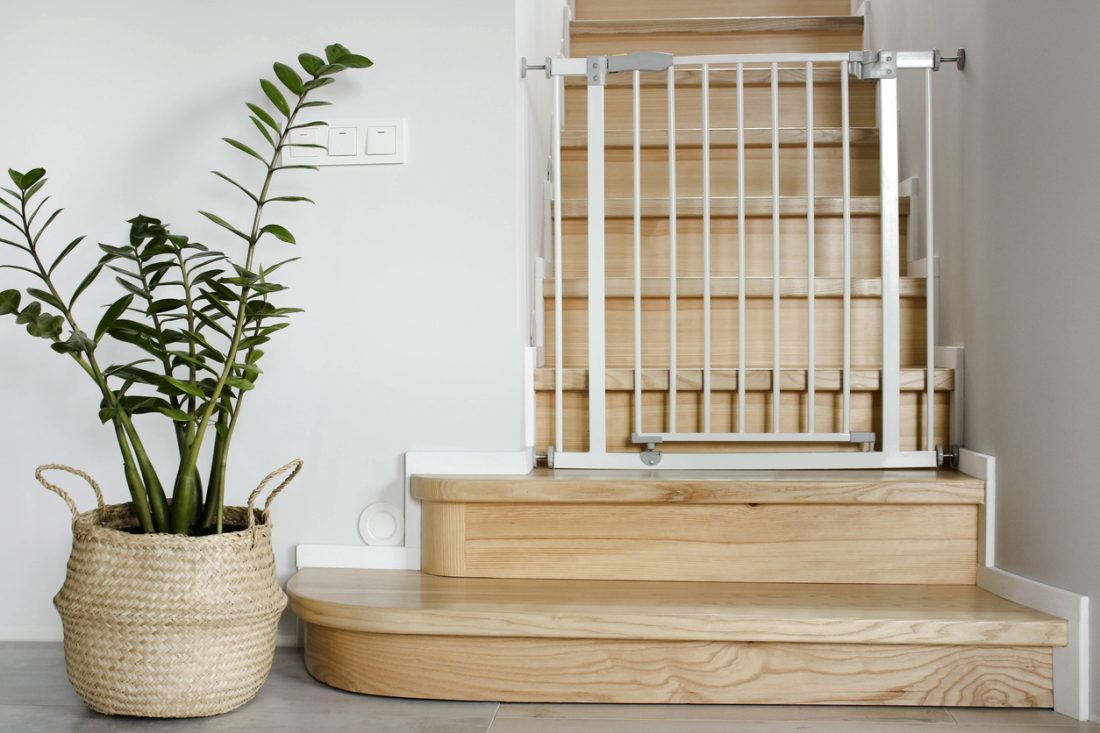
As they start to crawl and explore, it’s really time to buckle down on the childproofing! Place safety gates at the top and bottom of the stairs. Cover outlets with safety plugs, lock cabinets, anchor furniture, and block stairs with gates.
1 year and beyond:
Toddlers move fast but don’t understand danger yet. So, stay ahead of them! Increase cabinet locks, monitor climbing risks, and reassess regularly as mobility and curiosity expand.
At this age, we see far too many tragedies caused by toddlers pulling heavy furniture over, falling out of windows, and drowning in backyard pools.
Anchor bookcases, dressers and TVs to the wall. The American Academy of Pediatrics reports that: “a child is rushed to the emergency department at least once every single hour of every single day with injuries from a furniture or TV tip-over.”
Lock windows – even ones your child can’t reach. They will soon be able to pull a chair or stool to look out a window, and screens will not stop their fall.
In fact, this is a good time to think about anything your child could get into if they pull a chair over to help them reach higher. I remember watching my 2-year-old son use a stool to show his best buddy how they could undo the child look on the front door – which I thought would keep them safe from running into the street!
Keep an eye out for this list of scary things that all too often hurt young children:
Button batteries and small magnets. These are tempting for infants and toddlers who love to put everything into their mouths. And they are amongst the most dangerous things in your home. Either don’t have them or – lock them in high cabinets. Be sure to check devices – like TV remotes and toys to be sure covers are in place over magnets to keep them from falling out.
Windows. Not only can kiddos stand on something to try to look out – they can also become caught in window blind cords. These need to be stored up out of reach or if the cord has a loop – cut it.
Cleaning products. All-purpose cleaning sprays, bleach, dish soap … Oh my! There are so many. One of the worst are laundry and dish soap pods. They look bright and fun to a toddler and dissolve almost instantly in their mouth, releasing the super concentrated poisonous fluid. Or if bitten, the pods spray in the mouth, nose and eyes. Keep these and all cleaning products locked up high out of reach.
Medicines. Pills can look like candy – if you must keep medicines around the house, keep them out of sight and out of reach.
Personal hygiene products like nail polish remover, mouthwash, and perfume. I have no idea why a small child would be attracted to these, but I have seen the aftermath of their curiosity – so lock things like this up high.
Garage and garden products. There are so many dangerous things in both of these locations (herbicides, pesticides, gasoline, window washer fluid, etc.) Just like inside the home – move poisons way out of reach.
Cigarettes, e-cigarette refills, THC and alcohol. These are extremely dangerous poisons for young children. Lock them up. Never leave unfinished drinks or cigarettes within reach of little hands. If you need help quitting use of these substances for your child’s sake, please reach out to your doctor!
Trash. Just like my puppy – kids will go looking into trash! If trash has sharp items or poisons take it out or lock it up.
Weapons. The safest homes for children have no guns – but If your home has a gun, please lock it unloaded and separate from its ammunition in a gun safe.
Heaters, hot tools, liquids and foods. Avoid burns by keeping pot handles turned in, not leaving hot things within reach, not using tablecloths that can be pulled over. If you’re cooking or barbequing do not leave the area until everything is cool to the touch. Keep hair tools unplugged and stored away. Set your water heater to 120°F or below to prevent accidental scalding. Block access to heaters, radiators and fireplaces.
Plastic bags, latex gloves and balloons. All of these – even small torn of pieces of them – are choking and suffocation hazards. Dry cleaning bags are especially dangerous.
- Glass doors. Kids can run into and shatter them. Protect your child by applying a safety film that holds the glass together if broken. You can also try to make the glass more visible by placing stickers and decals at child’s height so they are less likely to run into the door.
- Sharp corners on furniture, stairs or fireplaces. Cushion these with corner guards.
A word about preventing childhood drowning.
Drowning is the single leading cause of death for children ages 1 to 4 and the second leading cause of injury-related death for children up to age 14. It can occur in even inches of water. To prevent a devastating tragedy:
- Never leave an infant or child unsupervised in the bathtub.
- Drain the tub as soon as bath time is over.
- Keep bathroom doors closed.
- Keep toilet lids closed. Use toilet seat locks. Really – they can drown in a toilet.
- Empty pails and kiddie pools immediately after using them.
- Provide active, focused adult supervision 100% of the time when children are near or in the water.
- Make sure all pools have a fence that surrounds all 4 sides, especially the side that separates the house from the pool. The fence should be non-climbable, at least 4 feet high, and be self-closing and self-latching. Use pool alarms, covers, and door locks to add an extra layer of protection.
Common Childproofing Mistakes
It’s easy to focus on the obvious dangers and make these errors:
- Assuming, “They can’t reach that yet.”
- Believing kids can’t open safety locks or containers. If they can’t now, they likely will soon.
- Forgetting to childproof other homes they visit, such as grandparents’ houses.
- Not reminding guests who stay in your home to keep dangerous items off the floor and out of reach.
- Failing to regularly check floors for small hazards.
- Not anchoring TVs, dressers and bookshelves to the wall.
- Leaving purses and bags within reach, even though they may contain pills, nicotine products, cosmetics, or even weapons.
- Thinking “It won’t happen in my home or to my child.”
- Relying solely on supervision instead of adding physical safety measures for an extra layer of protection. If you do that – there may be a moment when you lose attention on your child – when the phone or doorbell ring for example. It just takes a second for a child to get into danger!
Finally, take two simple but powerful steps: learn CPR and keep the Poison Control number handy.
Knowing CPR can make a lifesaving difference in an emergency, especially in cases of choking or drowning. And save the Poison Control number in your phone so you never have to search for it in a moment of panic (1-800-222-1222). Quick action and the right information can protect your child when every second counts.
Even the most attentive parent can’t be everywhere at once. Toddlers move fast, curiosity moves faster, and it only takes a second for an accident to happen. Childproofing your home isn’t about wrapping your child in bubble wrap or eliminating every tiny bump and bruise — those are part of growing up. It’s about creating a space where exploration is safe, and the biggest dangers are removed. When you focus on preventing serious risks like falls, poisoning, burns, choking, and drowning, you give your child the freedom to learn and play, while giving yourself greater peace of mind.
Resources for Parents
American Academy of Pediatrics
Childproofing Your Home for Poisons
Childproofing Tips for Grandparents
The U.S. Consumer Product Safety Commission


About the Author

Disclaimer: If you have an emergency medical condition, call 911 or go to the nearest hospital. An emergency medical condition is any of the following: (1) a medical condition that manifests itself by acute symptoms of sufficient severity (including severe pain) such that you could reasonably expect the absence of immediate medical attention to result in serious jeopardy to your health or body functions or organs; (2) active labor when there isn't enough time for safe transfer to a Plan hospital (or designated hospital) before delivery, or if transfer poses a threat to your (or your unborn child's) health and safety, or (3) a mental disorder that manifests itself by acute symptoms of sufficient severity such that either you are an immediate danger to yourself or others, or you are not immediately able to provide for, or use, food, shelter, or clothing, due to the mental disorder. This information is not intended to diagnose health problems or to take the place of specific medical advice or care you receive from your physician or other health care professional. If you have persistent health problems, or if you have additional questions, please consult with your doctor. If you have questions or need more information about your medication, please speak to your pharmacist. Kaiser Permanente does not endorse the medications or products mentioned. Any trade names listed are for easy identification only.