


Poison Safety at Home: What Parents Need to Know
Can you picture a skull and crossbones sticker on your childhood landline phone? Did it also have a number like the following?
Poison Control
Dial 1-800-222-1222
That landline may be long gone, but two things haven’t changed. Babies and young children are just as curious, impulsive, and vulnerable to ingesting poison as ever. And that number still works to get 24/7 advice. What has changed is some of the household items in our homes.
Today’s households contain many everyday items that can be dangerous to children if ingested.
Babyproofing today requires a keen eye by parents and caregivers, including grandparents! Some examples of dangerous household items include:
- Detergent pods
- E-cigarettes
- Button batteries
- Hand sanitizer
Whether you’re hosting children at your house or raising your own, reviewing your home’s “Danger Zones” can be a helpful way to reduce risk of a child ingesting something harmful.
Here are some of the most common danger areas:
Laundry room:
Kids can quickly put themselves in danger by popping colorful laundry detergent pods into their mouths (mistaking them for candy or treats). These pods are easily swallowed and can burst open. The pods contain concentrated detergent that can immediately irritate your child’s throat and gut. Solution: Use powdered or liquid detergents and keep them out of kids’ reach.
Kitchen:
When it comes to risk, dish detergent pods are just as dangerous as laundry pods. They contain strong chemicals that strip food from dishes. Other kitchen and home cleaning supplies are toxic if sprayed into the eyes or swallowed. These can also irritate the skin. As with the laundry, use liquid or powder dish detergent, not pods. Remember to lock all kitchen cabinets containing potentially dangerous chemicals.
Garage:
Whether the garage is used for cars or just storage, look for items that could be a danger for a child to get their hands on. Motor oil, fertilizer, antifreeze, pest control items, and paint can are a few of the dangerous items that can be touched, spilled, or ingested. Properly dispose of things you no longer need, and store others in a locked cabinet. Kids should always be accompanied when in a garage due to the possibility of injury from tools, vehicles, and the opening and closing of garage doors.
Bathrooms:
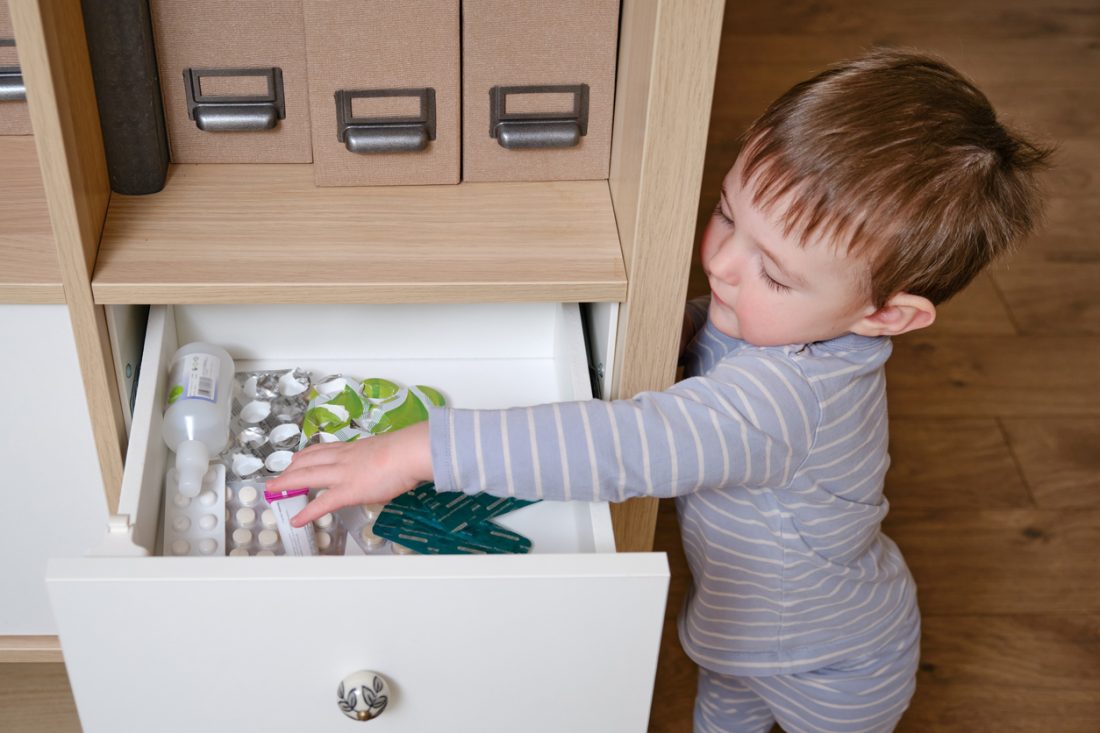
Many families already recognize the dangers of kids accessing medications. The medicine cabinet is not a safe storage space with kids around. Both over the counter and prescription medications should be stored securely where children can’t access them. Bathrooms contain additional hazards that are easy to overlook when kid-proofing a home. Even small amounts of hand sanitizer, mouthwash, and cosmetics can be harmful if ingested; simple changes in storage of these items can reduce the risk of accidental ingestions.
What else can you do to prevent childhood poisoning?
- Put the national Poison Control number in your cell phone just in case you ever need it.
- Watch for button (or “coin”) batteries, commonly found in key fobs, remote controls, hearing aids, toys and musical greeting cards. Kids often swallow these, which can cause severe complications in the gut.
- Ask grandparents and other caregivers to check their homes for potential poisoning risks. Confirm they have a safety plan in place.
Identifying possible hazards in your home can help prevent an emergency. Reviewing your home’s “danger zones” can help keep kids safe as they grow and explore the world around them.
Resources for Parents
American Academy of Pediatrics


Featured Author
 Dr. Lindsay Frost's biography reads: I joined the pediatrics team at Kaiser Permanente South Sacramento in 2018 to help kids thrive. During my medical training, I pursued a Masters degree in public health and health promotion. I enjoy being able to foster long-term relationships with patients and their families, providing care in both health and illness as children grow. Some of my most relevant experiences as a pediatrician have come from my two children, who have “trained” me first-hand on the challenges of parenthood.
Read more at https://mydoctor.kaiserpermanente.org/ncal/providers/lindsayfrost
Dr. Lindsay Frost's biography reads: I joined the pediatrics team at Kaiser Permanente South Sacramento in 2018 to help kids thrive. During my medical training, I pursued a Masters degree in public health and health promotion. I enjoy being able to foster long-term relationships with patients and their families, providing care in both health and illness as children grow. Some of my most relevant experiences as a pediatrician have come from my two children, who have “trained” me first-hand on the challenges of parenthood.
Read more at https://mydoctor.kaiserpermanente.org/ncal/providers/lindsayfrost Disclaimer: If you have an emergency medical condition, call 911 or go to the nearest hospital. An emergency medical condition is any of the following: (1) a medical condition that manifests itself by acute symptoms of sufficient severity (including severe pain) such that you could reasonably expect the absence of immediate medical attention to result in serious jeopardy to your health or body functions or organs; (2) active labor when there isn't enough time for safe transfer to a Plan hospital (or designated hospital) before delivery, or if transfer poses a threat to your (or your unborn child's) health and safety, or (3) a mental disorder that manifests itself by acute symptoms of sufficient severity such that either you are an immediate danger to yourself or others, or you are not immediately able to provide for, or use, food, shelter, or clothing, due to the mental disorder. This information is not intended to diagnose health problems or to take the place of specific medical advice or care you receive from your physician or other health care professional. If you have persistent health problems, or if you have additional questions, please consult with your doctor. If you have questions or need more information about your medication, please speak to your pharmacist. Kaiser Permanente does not endorse the medications or products mentioned. Any trade names listed are for easy identification only.