


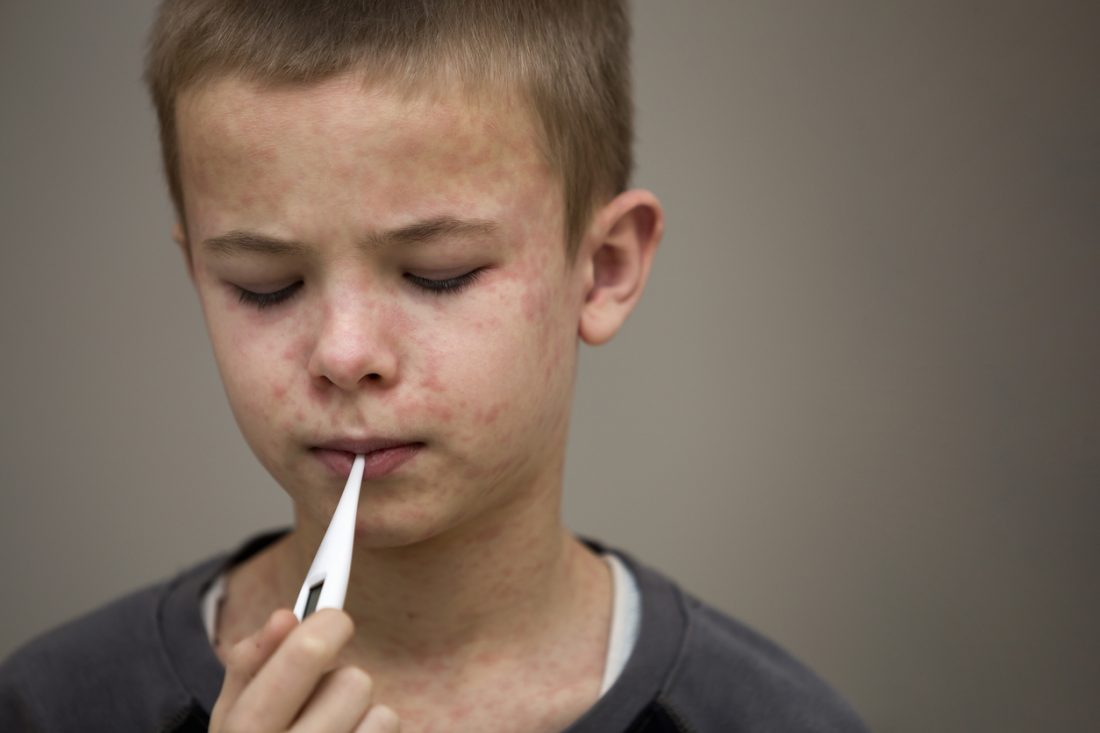
Doctor, Is This Rash Measles?!
In an episode of the 2025 medical drama “The Pitt,” a team of doctors works to revive an unconscious 13-year old in a chaotic emergency room. The child is critically ill, and the doctors notice a fading rash on his body. They learn that his sister, who called 911 when she found him unresponsive, had also been sick with a rash but recovered. After finding out that neither she nor her brother had had measles vaccines, the team made the diagnosis. While the sister was fortunate and recovered from measles on her own, the brother became one of the 1 in 4 people who end up hospitalized from measles – in his case, on a breathing machine.
Watching this episode hit a little too near to my pediatrician’s heart. This television drama was mirroring reality; as the episode aired, a large outbreak of measles was spreading in Texas, New Mexico, and Oklahoma. It’s devastating for doctors to witness the outbreak of a fully preventable disease causing illness, hospitalization, and even death, especially in the wake of the COVID-19 pandemic.
Just 25 years ago in the year 2000, measles was declared “eliminated” in the United States. Occasionally, measles cases would still “pop up” when brought in from people traveling internationally, but they would be identified and isolated without spreading to others.
What has changed in the U.S. over the past 25 years that led to the current measles outbreaks?
The answer lies in what we call “herd immunity.” Let’s take a look at forms of immunity, or the state of being protected from disease.
- Active immunity: When someone gets vaccinated, their body develops antibodies against the disease without first having to get sick. Active immunity can also occur with many diseases after someone has recovered from an illness and created antibodies to that virus.
- Passive immunity: This happens when someone gets immunity indirectly – like when a baby gets temporary immunity from their mother’s antibodies that pass through the placenta or breast milk.
- Herd immunity: When enough people have developed immunity (active or passive), the infection is unlikely to spread through a community because so few people are susceptible to it.
The importance of herd immunity
Herd immunity to measles exists when 92-94% of a community is immune to measles. This will limit the spread of the measles virus, because even if someone in the community gets infected, it’s unlikely that others will. But this isn’t the case in communities that don’t have enough herd immunity, putting them at risk for outbreaks.
Measles is extremely contagious; 9 out of 10 people exposed to the virus will get sick if they aren’t already immune. What’s most scary about measles is that there’s no treatment, and 1 in 4 infected people need hospitalization, like the character on the TV show.
Some children can’t get the measles vaccine, including:
- Babies under the age of 1
- Kids on certain immune-suppressing medications
- Kids undergoing cancer treatments
Lack of herd immunity puts these vulnerable babies and children at risk. This is why it’s critical that those who can get the vaccine get it – for themselves, and to help protect others who can’t.
Symptoms of measles
Many families have contacted my office to ask if their child’s rash is from the measles virus. Thankfully, if their child received routine immunizations, including doses of the measles, mumps, rubella (MMR) vaccine at 1 and 4 years of age, I can answer with 98% certainty that the rash is NOT measles.
If a child has had only one MMR vaccine, it’s still unlikely their rash is from the measles virus. A single MMR vaccine protects about 93% of
people from measles. If your child has just had one shot, we recommend contacting their doctor to discuss symptoms, especially if there are measles cases in the community.
For kids who have had no MMR vaccines, these are symptoms to watch for:
- Cough, runny nose, high fever, and red, watery eyes starting a few days before the rash.
- Small white spots that appear on the sides of the inside of the mouth (Koplik spots).
- A rash with numerous red spots that begins about 3 to 5 days after the other symptoms started. The rash starts on the face, then spreads down the body, arms, and legs. It’s not itchy and typically doesn’t show up on the palms of hands or soles of feet.
If your child has these symptoms, please call your doctor’s office for advice and an arrival plan. Measles is extremely contagious and could spread to babies or chronically ill children in the waiting room, so your doctor may ask that you take special precautions before bringing your child in.
Safety and efficacy of the MMR vaccine
The MMR vaccine is safe and effective against this devastating disease. By understanding the science of the measles virus and effective MMR vaccines, you can be empowered to make informed decisions. Vaccinations not only protect your own family, but also build herd immunity for the health and well-being of your wider community. If you have any questions or concerns about the MMR vaccine, please talk with your pediatrician. We’re here to support you in keeping your child healthy.


Featured Author
 Dr. Lindsay Frost's biography reads: I joined the pediatrics team at Kaiser Permanente South Sacramento in 2018 to help kids thrive. During my medical training, I pursued a Masters degree in public health and health promotion. I enjoy being able to foster long-term relationships with patients and their families, providing care in both health and illness as children grow. Some of my most relevant experiences as a pediatrician have come from my two children, who have “trained” me first-hand on the challenges of parenthood.
Read more at https://mydoctor.kaiserpermanente.org/ncal/providers/lindsayfrost
Dr. Lindsay Frost's biography reads: I joined the pediatrics team at Kaiser Permanente South Sacramento in 2018 to help kids thrive. During my medical training, I pursued a Masters degree in public health and health promotion. I enjoy being able to foster long-term relationships with patients and their families, providing care in both health and illness as children grow. Some of my most relevant experiences as a pediatrician have come from my two children, who have “trained” me first-hand on the challenges of parenthood.
Read more at https://mydoctor.kaiserpermanente.org/ncal/providers/lindsayfrost Disclaimer: If you have an emergency medical condition, call 911 or go to the nearest hospital. An emergency medical condition is any of the following: (1) a medical condition that manifests itself by acute symptoms of sufficient severity (including severe pain) such that you could reasonably expect the absence of immediate medical attention to result in serious jeopardy to your health or body functions or organs; (2) active labor when there isn't enough time for safe transfer to a Plan hospital (or designated hospital) before delivery, or if transfer poses a threat to your (or your unborn child's) health and safety, or (3) a mental disorder that manifests itself by acute symptoms of sufficient severity such that either you are an immediate danger to yourself or others, or you are not immediately able to provide for, or use, food, shelter, or clothing, due to the mental disorder. This information is not intended to diagnose health problems or to take the place of specific medical advice or care you receive from your physician or other health care professional. If you have persistent health problems, or if you have additional questions, please consult with your doctor. If you have questions or need more information about your medication, please speak to your pharmacist. Kaiser Permanente does not endorse the medications or products mentioned. Any trade names listed are for easy identification only.