


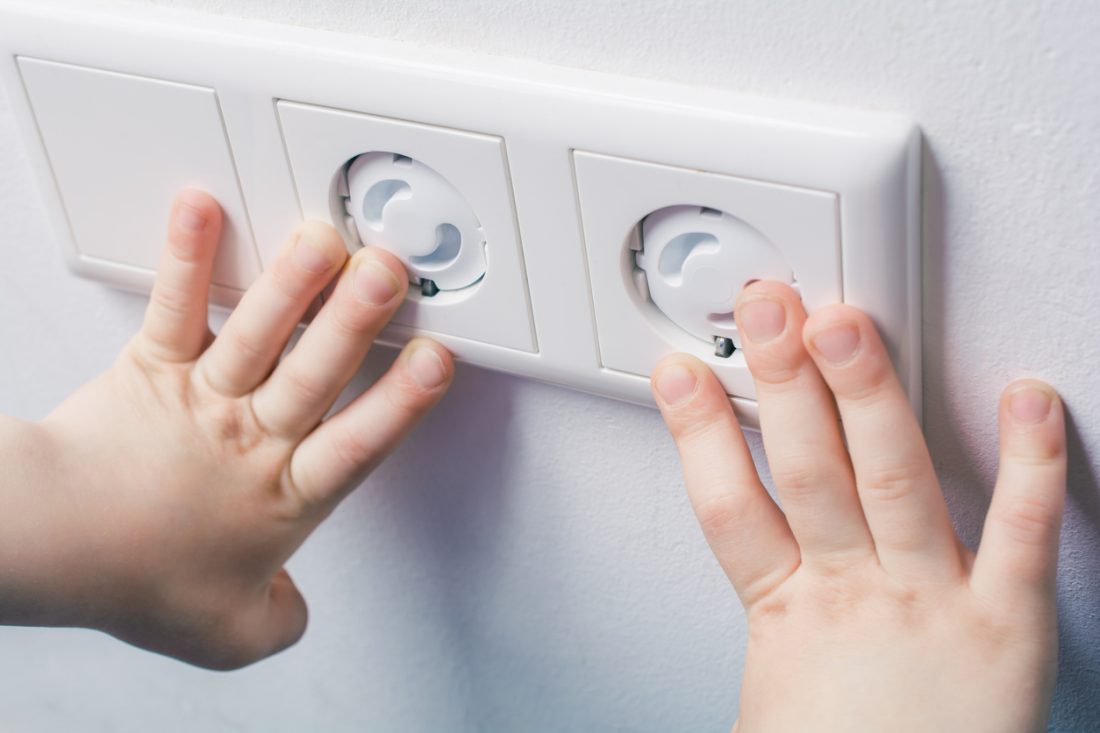
Home Safety for Your Growing Child
Once both of my kids were in elementary school, they started doing things more independently – showering on their own, walking to school together, sometimes even assembling their own PB&J for lunch. But the night my daughter slipped on a wet floor getting into the shower was a sobering reminder that parental supervision – and babyproofing the home – is never really finished, even after the baby stage. As my daughter screamed with blood running down her face from a cut eyebrow, we were reminded that accidents do happen, but they can also often be prevented.
Once my daughter’s cut was stitched up and the scare of the incident settled, we talked with the kids about how to prevent bathroom injuries in the future. Putting down the rubber bathmat, holding on to the wall while stepping into the shower, and drying off on the bath rug were excellent suggestions from our shaken kiddos.
Moments like this blur the line between my roles as a parent and a pediatrician. Part of my workday is talking with families about injury prevention, yet I know firsthand that trying to prevent any negative outcome through “helicopter parenting” is going too far. Finding the balance between minimizing risk and giving my kids room to learn and grow independently is something I’m still learning to navigate.
When we talk in clinic about childproofing a home, the goal is really to prevent catastrophic events. Even after “babyproofing,” parents still must stay aware with young kids and then help them learn to make safety decisions on their own as they grow.
Below is my list of must do childproofing actions for any home.
For a practical safety test, invite a friend with a baby who’s walking or a toddler to visit, and observe what else catches their attention in your home. Children are often the best “home safety inspectors!”
Home safety for kids who are crawlers:
- Small objects: Babies can crawl, reach, grab, and put things in their mouths. When kids are 4 months old, parents need to start becoming aware of what babies can get their hands on around them to prevent choking or swallowing concerning objects. [link to poison post here]
- Cabinets: Kids are curious! Ideally don’t keep any cleaning fluids or medications in cabinets that kids have access to. Put baby locks on the cabinets that do have these items, even if you think kids can’t reach them.
- Baby gates: Corralling kids into less dangerous areas of the home is often the simplest solution. A baby gate is also important at the top of the stairs once kids start to move (even if they’re log rolling!). As they start crawling, a gate at the bottom of the stairs is helpful too. Over time, you can teach them to safely climb and descend the stairs.
- Mattress height in crib: As kids start rolling, it’s time to move out of the bassinet or lower the mattress in the crib. Once they’re sitting, it should be at the bottom level to prevent kids from pulling themselves over the edge.
Home safety for kids who are walkers:
As kids pull themselves up to stand (usually leading up to age 1), there’s another physical level of childproofing to worry about!
- Stove: Regardless of electric or gas stove type, consider putting safety knob covers on the stovetop handles and a lock to keep the oven door closed.
- Furniture: There are unfortunately devastating stories of kids who are injured under bookshelves, dressers, TVs, and other heavy furniture items as they used the furniture to pull themselves up. Most modern bookshelves and dressers come with a wall anchor you can attach to prevent this type of injury.
Similarly, cords – both for plugs and for blinds – can be pulled on but also have a strangulation risk. Be smart and tack these down or keep them out of reach wherever possible.
- Water: Drowning can happen in just a few inches of water. Never turn on the bath water without being in the room watching your baby/toddler/young child the whole time. Even toilets can be a risk. We found it simplest to keep bathroom doors closed with safety covers on the knobs, so our young kids couldn’t sneak into the bathroom without us.
For homes with pools, an enclosed locking pool fence and door alarm are non-negotiables to promote water safety. Swim lessons aren’t a replacement for these physical safeguards but are a key piece of being water wise.
Home safety for older kids:
Once kids are out of the toddler stage, it can be easy to forget they too need to have a watchful eye on them. Parents of big kids and adolescents need to be aware of precautions for bike and e-scooter safety, car safety, and firearm safety.
I’ve unfortunately met kids seriously injured by home exercise equipment. Even as children grow more independent, backyard activities still call for active supervision, especially when trampolines and pools are involved.
As they start to understand more about risks, consequences, and personal responsibility, talking openly with your growing kids about these topics is helpful. Setting clear, consistent safety rules in advance for a child of any age can go a long way in preventing injuries and keeping playtime both fun and safe.
Resources for Parents
American Academy of Pediatrics
5 Questions to Ask Before a Playdate
5 Common Household Objects that are Dangerous to Curious Toddlers


Featured Author
 Dr. Lindsay Frost's biography reads: I joined the pediatrics team at Kaiser Permanente South Sacramento in 2018 to help kids thrive. During my medical training, I pursued a Masters degree in public health and health promotion. I enjoy being able to foster long-term relationships with patients and their families, providing care in both health and illness as children grow. Some of my most relevant experiences as a pediatrician have come from my two children, who have “trained” me first-hand on the challenges of parenthood.
Read more at https://mydoctor.kaiserpermanente.org/ncal/providers/lindsayfrost
Dr. Lindsay Frost's biography reads: I joined the pediatrics team at Kaiser Permanente South Sacramento in 2018 to help kids thrive. During my medical training, I pursued a Masters degree in public health and health promotion. I enjoy being able to foster long-term relationships with patients and their families, providing care in both health and illness as children grow. Some of my most relevant experiences as a pediatrician have come from my two children, who have “trained” me first-hand on the challenges of parenthood.
Read more at https://mydoctor.kaiserpermanente.org/ncal/providers/lindsayfrost Disclaimer: If you have an emergency medical condition, call 911 or go to the nearest hospital. An emergency medical condition is any of the following: (1) a medical condition that manifests itself by acute symptoms of sufficient severity (including severe pain) such that you could reasonably expect the absence of immediate medical attention to result in serious jeopardy to your health or body functions or organs; (2) active labor when there isn't enough time for safe transfer to a Plan hospital (or designated hospital) before delivery, or if transfer poses a threat to your (or your unborn child's) health and safety, or (3) a mental disorder that manifests itself by acute symptoms of sufficient severity such that either you are an immediate danger to yourself or others, or you are not immediately able to provide for, or use, food, shelter, or clothing, due to the mental disorder. This information is not intended to diagnose health problems or to take the place of specific medical advice or care you receive from your physician or other health care professional. If you have persistent health problems, or if you have additional questions, please consult with your doctor. If you have questions or need more information about your medication, please speak to your pharmacist. Kaiser Permanente does not endorse the medications or products mentioned. Any trade names listed are for easy identification only.