


Understanding Asthma Medications for Kids
I love being a pediatric pulmonologist; the lungs and the respiratory system are incredible! Did you know that if you spread the entire adult lung out on a flat surface, it would take up half of a tennis court?!
As fascinating as the lungs are, they can cause trouble too – especially for people who have asthma. I should know, because I’m one of them! Fortunately, following my asthma treatment plan allows me to stay healthy and manage my asthma at home most of the time. And if your child has asthma, with the right guidance, you can learn to do the same.
An important part of managing asthma at home is understanding the medicines you’ll use to treat it.
I’m not a particularly good handyman, but I do know that using a screwdriver or drill is a better way to place a screw than beating it with a hammer. When treating asthma you also want to be sure to use the right tool!
There are two main types of asthma medications: “relievers” and “controllers.” Your child may be prescribed one or both. They treat asthma in different ways.
- Relievers treat the symptoms of asthma right away when your child needs relief now.
- Controllers help manage asthma over the longer term, to help prevent symptoms from occurring.
An asthma action plan can be an important guide to help control your child’s asthma symptoms at home and know which medicine to use and when. If your child doesn’t have a personalized asthma action plan, I recommend you discuss this with their doctor – it might be useful.
Asthma Relievers
Albuterol is a fast-acting reliever medication for asthma symptoms like chest tightness, coughing, wheezing, and difficulty breathing. It’s a bronchodilator, which means it works by relaxing the tightened muscles that wrap around the breathing tubes during an asthma attack. Albuterol typically works in 5 to 15 minutes, and the effect wears off in about 4 to 6 hours. Think of it as a temporary band-aid for relieving asthma symptoms.
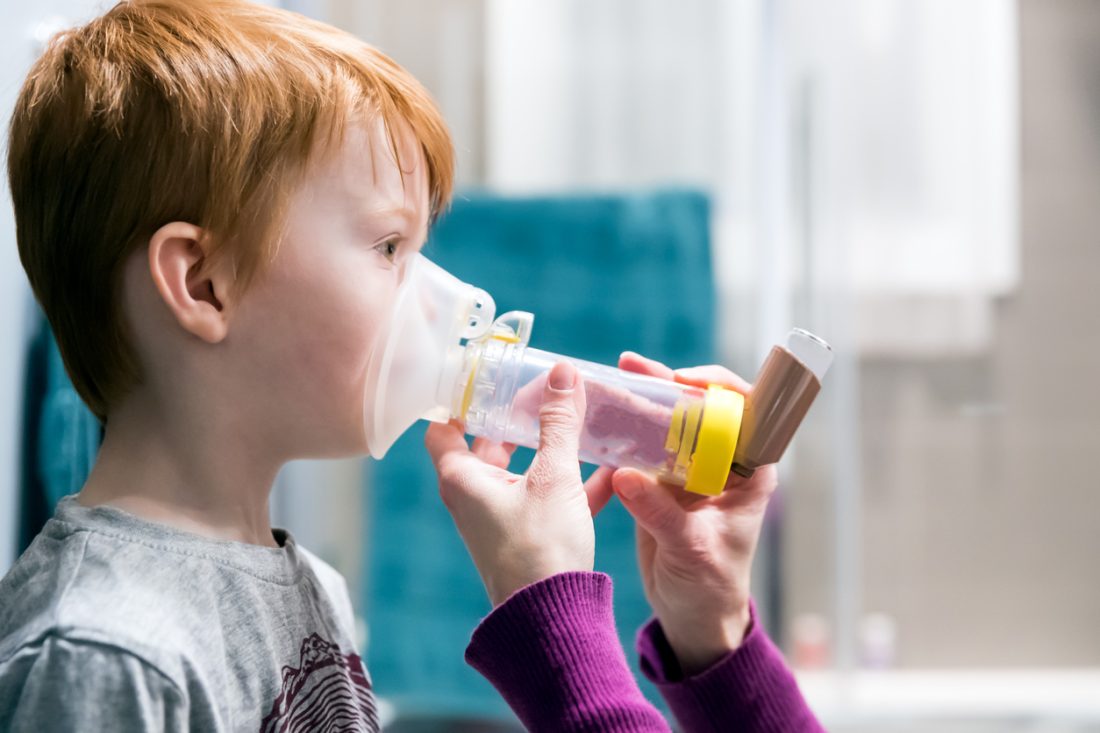
Albuterol is usually given via a metered dose inhaler (MDI). Brand names of albuterol MDIs are Ventolin, Proair, and Proventil. It is important to use a spacer chamber whenever you are giving your child asthma medicines with an MDI. Without one, you’ll end up spraying medicine all over their lips, tongue, and throat rather than into their lungs. The spacer chamber gets the medicine straight to the lungs so it can start working.
Albuterol may also be through a nebulizer to create a medication mist that is inhaled. If giving nebulized medications, it is important to place the nebulizer mask on your child’s face or mouthpiece in their mouth while giving the medication. Blowing the mist in front of the face without using a mask or mouthpiece is NOT an effective way to get the medication into their lungs. In most cases children do not need a nebulizer and can use just their metered dose inhaler.
For some children, we also recommend another medication – nebulized ipratropium (Atrovent), a different fast-acting reliever, to use along with their albuterol during bad asthma attacks as part of their individual asthma action plan.
Asthma Controllers
Depending on your child’s asthma severity, their doctor may decide that asthma controller medications are needed. The most-used asthma controller medications are inhaled corticosteroids (ICS). These medications coat the lining of the breathing tubes to reduce inflammation and prevent asthma symptoms. ICS medications don’t work quickly, so they generally shouldn’t be given for quick relief of asthma symptoms.
Sometimes, a different non-steroid asthma control medication called leukotriene receptor antagonists (LTRA) is used alone or in addition to ICS.
Combination Asthma Therapies
Some ICS medications also contain a long-acting bronchodilator medication (different than albuterol.) These combination medications have the effects of both controller and reliever medications. Advair, Wixela, Dulera and Symbicort are combination medications.
Keeping Your Child’s Asthma Controlled
Helping your child have less asthma symptoms can start by identifying what triggers their symptoms. Are they exposed to second-hand smoke, do they have allergies or does their asthma flare with each viral cold they get? Ask their doctor for advice for trigger avoidance and to ask if a controller medication is needed. Also, it is very important to protect any child with asthma by giving them the flu vaccine. Influenza can be very severe for kids who have asthma.
Consistently using your child’s asthma controller medication as instructed by their doctor is the best way to control their asthma. If their asthma symptoms persist, it’s important to discuss this with their pediatrician to decide if the medications should be adjusted or changed.
Resources for Parents:
American Academy of Pediatrics
How to Use a Spacer without a Mask
Nationwide Children’s Hospital
Centers for Disease Control and Prevention
Asthma and Allergy Network


Featured Author
 Dr Kyle McCallin's biography reads: I am from Northern Kentucky, close to Cincinnati, Ohio. I attended medical school at Touro University College of Osteopathic Medicine in Henderson, NV. My wife and I moved to Southern California where I completed pediatric residency training at Kaiser Permanente Los Angeles Medical Center. I then completed pediatric pulmonology fellowship training at Children's Hospital Los Angeles. I chose to become a doctor pretty early in my life. I was hospitalized for several months as a child, and I gained tremendous appreciation for the nurses, doctors, physical therapists, and other care providers who helped me recover. It is my passion and privilege to provide care, in turn, for my patients. For fun, I enjoy spending time with my wife and our dachshund, watching movies and cartoons, and playing video games. I also enjoy martial arts and classic movies. More information about Dr. McCallin can be found on his webpage.
 Disclaimer: If you have an emergency medical condition, call 911 or go to the nearest hospital. An emergency medical condition is any of the following: (1) a medical condition that manifests itself by acute symptoms of sufficient severity (including severe pain) such that you could reasonably expect the absence of immediate medical attention to result in serious jeopardy to your health or body functions or organs; (2) active labor when there isn't enough time for safe transfer to a Plan hospital (or designated hospital) before delivery, or if transfer poses a threat to your (or your unborn child's) health and safety, or (3) a mental disorder that manifests itself by acute symptoms of sufficient severity such that either you are an immediate danger to yourself or others, or you are not immediately able to provide for, or use, food, shelter, or clothing, due to the mental disorder. This information is not intended to diagnose health problems or to take the place of specific medical advice or care you receive from your physician or other health care professional. If you have persistent health problems, or if you have additional questions, please consult with your doctor. If you have questions or need more information about your medication, please speak to your pharmacist. Kaiser Permanente does not endorse the medications or products mentioned. Any trade names listed are for easy identification only.